A B C: Better Grades with the 6x60 Study Guide Program is 25% off this month! Get yours at https://www.smashwords.com/books/view/566643
Tuesday, July 5, 2016

Monday, June 27, 2016
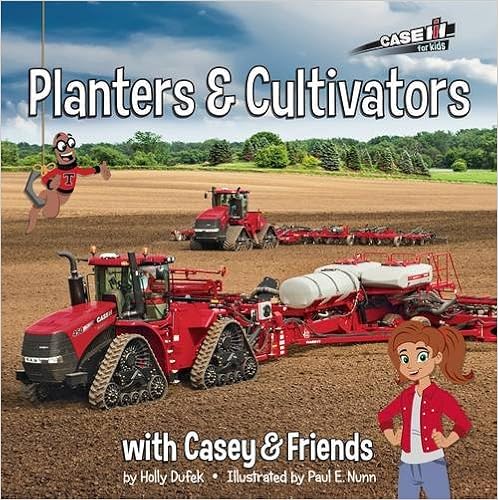
Casey and her friends are at it again! This time, author
Holley Dufek and illustrated Paul E. Nunn teach about preparing the soil,
planting and harvesting with Planters
& Cultivators. The format of this and the other books in the series
continues to offer different options for read-alouds: for the youngest
listeners or for when you have limited time (or attention spans!), you can read
just the story narrative; when time isn't at a premium or when sharing with
older kids, you can read Tillus's side bars to learn even more.
I've seen large- and small-scale farming all my life, so the
machines in the book are familiar, but I still learned new and fun facts about
them. If you have a reader who loves big machines or who is a farmer in the
making, you've GOT to have this book!
Tuesday, April 26, 2016
Before we get into a full-blown lesson/unit on discrimination and bullying, I'd like to share a post I found that defines bullying. I apologize that I can't provide you with a link to the original; I can't remember where I found it! If I can find it again, I'll add the link.
(Copied):
(Copied):
Many sources report that the U.S. is experiencing
an epidemic of bullying, and the Stopbullying.gov website reports that as many
as 28 percent of sixth- to twelfth-grade students have been bullied. It is
often difficult to distinguish ordinary social clashes from bullying; it is
important to do so, however, because they require very different responses on
the part of bystanders and adults.
What Is
“Normal”?
Social conflict refers to disagreements between
two or more people with equal power or control. Generally, both parties are
very emotional about the argument, which usually centers on something external
to both sides: siblings arguing over which television show to watch or who gets
the biggest piece of cake, peers squabbling over a potential girlfriend or
boyfriend. Typically, both parties want the problem resolved, and both are
usually willing to take responsibility and will show remorse, eventually. Most often,
if the external focus goes away, the conflict ends.
It is important not to intervene too quickly in
these kinds of situations. While it is nice to believe that people can always
get along, the reality is that, even as adults, folks disagree, sometimes to
the point of loud arguments. It is important for children and teens to have the
opportunity to learn to resolve issues for themselves. As a parent or teacher,
your best help is to teach your child conflict resolution skills like active
listening and compromise. If necessary, you might referee a discussion between
the sides, but let the feuding factions lead the conversation.
When Is It
Bullying?
Bullying looks very different from everyday
conflict and disagreement. A bully fully intends to hurt the target, either
physically or emotionally, and behaves aggressively to do so. Bullying is a
pattern of behavior, rather than a single episode; it always involves an
imbalance of power that make it difficult, if not impossible, for the target to
make it stop, such as a bigger student harassing a smaller one or a popular
student bullying someone less popular. Although bullies often defend themselves
by claiming they were only “kidding around,” the teasing involved is unwanted
-- a situation in which all involved are not enjoying the joke. Verbal bullying
involves attacks on internal qualities of the target, such as appearance,
grades or socio-economic status.
Bullying is also characterized by a difference in
the emotional response to the actions. In a normal social quarrel, the
reactions are fairly equal; when bullying is involved, the victim feels fear,
perhaps anger, but the bully has little or no emotional response at all. The
bully is seeking power, control or material possessions, rather than the resolution
sought in ordinary conflict. The threats are often very serious, and the bully
may blame the target for the problem.
Bullying requires immediate intervention, and it
should not involve having the two parties “talk it over.” A victim should never
be forced to participate in mediation efforts, nor should he be held
responsible in any way. A bully is the only one accountable for the
unacceptable behaviors, and he is the only one responsible for changing the
behaviors and attitudes.
One encouraging point, however, is that 56 percent
of tweens and young teens report that they have either done something to stand
up to a bully or have reported it to someone with the power to make it stop.
Empowering students with strategies for not joining in, seeking adult help,
taking a stand, mobilizing peer response or befriending the bullied peer offer
another layer of resources to combat this problem.
Wednesday, March 2, 2016
Spring's On the Way -- Bring It in With Book Fun!
I love, love, love gardening…well, I love the IDEA
of gardening, but maybe not so much the hard work. Reading about gardens is the
next best thing, and Eric Ode's new book, Too
Many Tomatoes, is perfect book to start spring.
Ode's rollicking rhymes and illustrator Kent
Culotta's gorgeous pictures take us through the fun of planting and growing
fruits and vegetables, and anyone who has ever grown tomatoes will empathize
with the narrator and his grandparents, as they find themselves facing a
surfeit of the sweet fruits! This book also provides so many teaching points
throughout, from alliteration to rhymes to measurement and cooking.
Subscribe to:
Posts (Atom)